
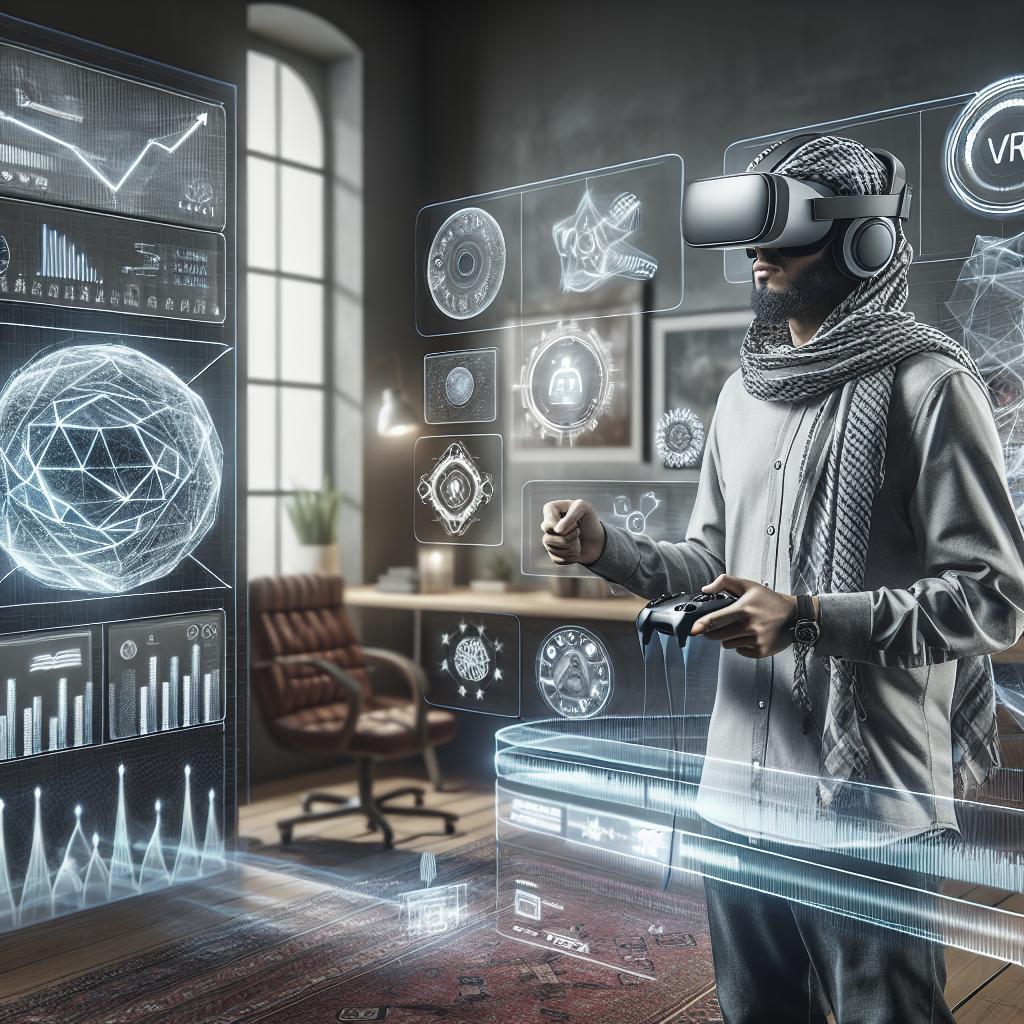
What are the Trends in VR Gaming Technologies?
As the boundaries between the real and virtual worlds continue to blur, emerging technologies in Virtual Reality (VR) gaming are captivating audiences and redefining the way we experience interactive entertainment. This blog post delves into the latest trends within the VR gaming industry, highlighting key technological advancements and their impacts. It explores the integration of AI into VR, examines the potential of quantum computing to revolutionize gaming experiences, and addresses current challenges within the field. Additionally, the post considers future prospects for AI and VR collaboration. This comprehensive look at VR gaming trends will help you understand how this technology continues to evolve and shape the future of digital interaction.
Emerging Trends in VR Gaming
The VR gaming landscape is undergoing a transformative phase with several key trends driving its evolution. The advancements in hardware, such as VR headsets like Oculus Quest 2, have made VR more accessible to the average consumer. This has increased the popularity of immersive gaming experiences which allow players to engage with digital worlds in new and exciting ways.
Another significant trend is the focus on social VR, where developers create platforms that enable interaction and shared experiences within virtual environments. Social VR games and applications are becoming increasingly sophisticated, offering players the chance to connect with friends and strangers alike in engaging, interactive settings. Moreover, cross-platform play is becoming more common, allowing users to bridge the gap between different gaming systems and share their experiences across various platforms.
Latest Trends In AR/VR Gaming Technology
Augmented Reality (AR) and Virtual Reality (VR) are increasingly being combined to create a seamless mixed reality experience. Companies are focusing on technologies that integrate the physical and virtual worlds, providing players with unique and realistic interactions. This trend is facilitated by significant improvements in motion tracking and haptic feedback technologies.
Another exciting development is the rise of cloud-based VR gaming services. These services allow players to access and stream VR experiences from anywhere with a stable internet connection, eliminating the need for powerful local hardware. By leveraging the power of the cloud, these services provide high-quality graphical experiences at a lower cost, making VR gaming more accessible to a broader audience.
Advanced Application Of AI And AR/VR Technologies Together
Neural Interfaces
Neural interfaces are at the frontier of AI and VR integration, representing a cutting-edge intersection of neuroscience and digital technology. These interfaces aim to bridge the gap between human cognition and machine interaction, allowing players to control VR environments through brainwave patterns. This innovation promises to revolutionize gameplay experiences, offering unprecedented levels of immersion and interactivity.
While still in its developmental stages, the potential applications of neural interfaces in gaming are vast. By effectively translating cognitive signals into digital commands, users could experience a more intuitive form of control, free from the limitations of traditional input devices. However, this technology also poses significant ethical and security challenges that need to be carefully considered as it evolves.
Personalized Virtual Reality Worlds
The fusion of AI with VR technology has paved the way for the creation of personalized virtual worlds, tailored to individual preferences and behaviors. AI algorithms analyze player data to generate environments and narratives that align closely with user expectations, crafting unique and engaging experiences for each player.
This personalization extends beyond mere visual adjustments, impacting the storyline, game mechanics, and even character interactions. As AI systems become more sophisticated, the ability to deliver dynamically evolving VR worlds will grow, providing an ever-changing playground for players to explore and interact with, enhancing the overall gaming experience.
Quantum Computing And AR/VR
Quantum computing holds the potential to redefine the framework of AR and VR technologies through its ability to process vast amounts of data at unprecedented speeds. While still in its infancy, quantum computing could drastically enhance the performance and capabilities of VR games, enabling developers to create more complex and realistic simulations.
The integration of quantum computing with AR and VR could lead to more detailed and lifelike graphics, improved physics engines, and the ability to simulate entire ecosystems with high fidelity. This, in turn, would facilitate the development of highly immersive games, pushing the boundaries of what is currently possible in virtual environments.
Holodeck-Like Experiences
The concept of a ‘holodeck’—a fully immersive, interactive simulation room brought to prominence by science fiction—serves as an inspiration and ultimate goal for VR developers. By leveraging advances in holography, motion tracking, and realistic environmental simulation, the dream of creating lifelike, boundless virtual worlds is within reach.
These experiences require a harmonious mix of hardware and software advancements, alongside AI to tailor interactions based on user movements and decisions. As engineers work towards perfecting these technologies, the potential for incredibly rich and interactive virtual experiences continues to expand, offering exciting possibilities for the future of gaming and beyond.
AI’s Impact On Enhancing AR/VR Experience
Procedural Content Generation
AI-driven procedural content generation (PCG) leverages machine learning algorithms to create vast, complex game worlds without the need for extensive human input. This technology enables developers to generate expansive and diverse game environments, populating them with unique assets and scenarios in real-time.
With PCG, each gaming experience can be unique, providing endless replayability and reducing development times and costs. This innovative use of AI is particularly beneficial in VR, where it facilitates the creation of large-scale, immersive environments that engage players more deeply.
Advanced AI Avatars
The development of sophisticated AI-powered avatars is significantly enhancing interaction within VR environments. These avatars are capable of understanding and responding to players with increasingly human-like behaviors, offering more natural and engaging social interactions in virtual worlds.
Powered by deep learning and natural language processing technologies, AI avatars can be used as guides, companions, or opponents in VR games, adapting their responses based on player input and making each interaction unique. This capability enhances the realism and immersiveness of VR experiences, breaking down barriers between human players and digital entities.
Adaptive Learning & Predictive Analytics
AI’s role in adaptive learning and predictive analytics helps developers understand and predict player behavior, enabling the creation of more personalized and challenging gaming experiences. By analyzing player data, AI systems can dynamically adjust difficulty levels and offer tailored challenges that keep players engaged.
Predictive analytics also supports developers in anticipating trends and shifts in player preferences, guiding future game design and ensuring that VR experiences stay ahead of player expectations. This forward-thinking approach is crucial for maintaining a cutting-edge presence in the rapidly evolving gaming landscape.
AI Intersection With AR/VR Technology Poses Challenges Too
Security And Anti-Cheating Measures
The integration of AI into AR and VR gaming brings with it a host of security concerns, particularly with regard to data privacy and cybersecurity. As VR systems become more interconnected and reliant on cloud computing, safeguarding personal data and maintaining secure servers are paramount to preventing data breaches and unauthorized access.
Additionally, AI can aid developers in implementing robust anti-cheating measures, ensuring fair play and maintaining the integrity of the gaming environment. Continuous monitoring and adaptation are necessary to identify and respond to new and evolving threats in this space.
Socio-Economic Limitations
While VR and AI technologies are advancing rapidly, there remains a significant socio-economic gap in access to these innovations. High costs associated with state-of-the-art hardware and software can be prohibitive for many, limiting the reach and inclusivity of these technologies on a global scale.
Developers and policymakers must work together to address these limitations, promoting widespread access and affordability. Ensuring that a diverse audience can benefit from these advancements is crucial for fostering an inclusive and innovative gaming community.
Future Of AI Integration With AR/VR Technology
The future of AI integration into AR and VR technologies is filled with promise, as ongoing advancements continue to push the boundaries of what is possible. The seamless blending of AI with VR environments will likely lead to ever more sophisticated and engaging gaming experiences, offering unprecedented levels of immersion and interaction.
As these technologies mature, the potential applications will expand beyond gaming, influencing sectors such as education, healthcare, and remote work. By harnessing the power of AI within virtual environments, industries can transform how they operate, creating more efficient and personalized experiences for users worldwide.
Final Words
Embracing the synergy between AI and VR presents exciting opportunities for the gaming industry and beyond. By continuously innovating and addressing challenges, developers can create transformative experiences that enrich lives and broaden horizons. The journey is only beginning, and the potential is limitless.
Let’s work together to make your business journey successful.
Whether you’re seeking to integrate AI solutions or enhance VR experiences, opportunities abound for leveraging these cutting-edge technologies. By collaborating with industry experts, your business can harness the potential of AI-integrated VR to stay ahead in a competitive market.
More From Forbes.
For more in-depth analysis and insight into the latest trends in technology and innovation, consider exploring Forbes’ extensive collection of articles and reports. Staying informed and inspired has never been more crucial as the digital landscape continues to evolve.
| Section | Key Points |
|---|---|
| Emerging Trends in VR Gaming | Accessibility through advanced VR hardware, social VR, and cross-platform play. |
| Latest Trends In AR/VR Gaming Technology | Integration of AR and VR, cloud-based VR gaming. |
| Advanced Application Of AI And AR/VR Technologies Together | Neural interfaces, personalized VR worlds, quantum computing, holodeck-like experiences. |
| AI’s Impact On Enhancing AR/VR Experience | Procedural content generation, AI avatars, adaptive learning & predictive analytics. |
| AI Intersection With AR/VR Technology Poses Challenges Too | Security concerns, socio-economic limitations. |
| Future Of AI Integration With AR/VR Technology | Expanding applications beyond gaming, potential for innovation in various sectors. |