
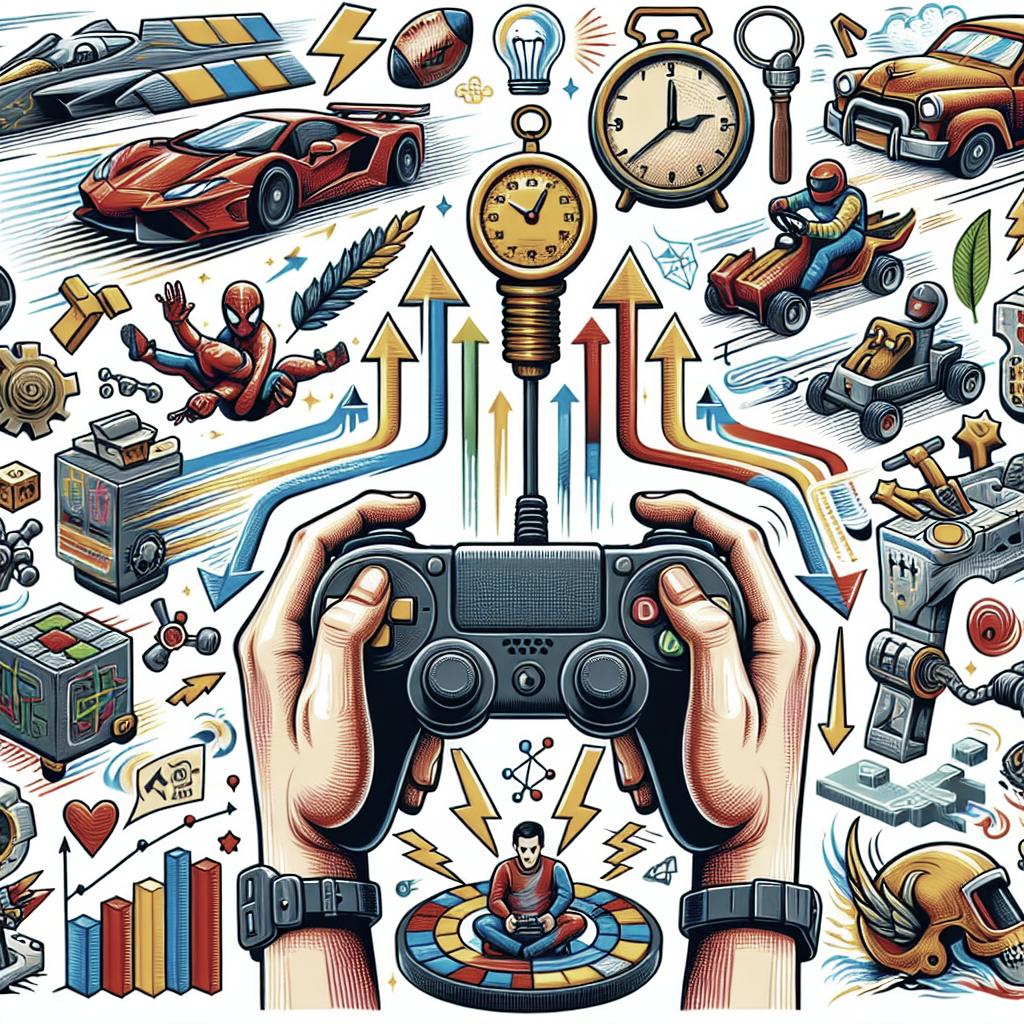
How to Improve Reaction Times in Fast-Paced Games
In the competitive world of fast-paced games, even the smallest edge can make a significant difference. Improving reaction times can enhance your gameplay by allowing you to make split-second decisions and outmaneuver opponents. This blog post explores various methods to boost your reflexes, including the science behind reflex improvement, enhancing hand-eye coordination, and managing stress. We’ll also look into specific video games noted for aiding in reaction time improvement, address critics and limitations, and back these methods with statistical evidence. By understanding these factors, you can refine your gaming skills and enjoy a more immersive gaming experience.
The Science Behind Reflex Improvement
Reflex improvement is often discussed in neurological terms—our bodies are a complex network where the brain communicates with the rest of our system through neurons. Reaction times hinge on the speed of these neurons. They carry impulses as they race through synaptic connections, determining how swiftly you can respond to stimuli. Practicing specific drills or engaging in focus-enhancing activities can strengthen these neural pathways.
Recent studies highlight that dopamine, a neurotransmitter associated with reward and pleasure, plays a pivotal role in this process. Fast-paced games release dopamine, thus reinforcing the circuits responsible for quick reactions. As these pathways become more established through repetitive actions in gaming environments, players often begin to notice a significant improvement in their reflex times.
Enhanced Hand-Eye Coordination
In navigating fast-paced games, enhanced hand-eye coordination is a crucial skill. This attribute allows for better spatial awareness and precision—key elements for responding swiftly to in-game actions. Activities such as juggling, ping pong, or specific video game training apps can help to synchronize visual input with physical response, leading to improvements in hand-eye coordination.
Moreover, the rapid decision-making present in gaming hones your ability to process visual information quickly. This not only boosts your hand-eye coordination but also improves your overall cognitive agility. Practicing these skills outside of gaming—such as with sports or real-world activities that require similar coordination—can have a parallel positive impact on your gaming reflexes.
Stress Management and Cognitive Agility
While gaming, it’s easy to become overwhelmed under pressure. Effective stress management techniques can improve your reaction times significantly. Learning to maintain calm and composed in tense situations helps prevent cognitive overload and keeps your reactions sharp. Techniques like deep breathing, mindfulness, and brief meditation exercises can assist in achieving this state of equanimity.
Cognitive agility isn’t just about how fast you can process information, but also how flexibly you can adapt to new situations. This flexibility is crucial in games where unpredictability is a key feature. Exercises in lateral thinking, puzzles, and problem-solving tasks outside the gaming world can train your brain to react more fluidly, benefiting both your in-game performance and everyday life.
Specific Video Games That Help
Certain genres of video games are especially effective at boosting reaction times. First-person shooters (FPS) like “Call of Duty” or “Counter-Strike” demand quick responses to visual and auditory stimuli, making them excellent for training fast reflexes. Similarly, real-time strategy (RTS) games require swift decision-making and can enhance cognitive processing speed.
Racing simulation games are another category where reaction time is honed effectively. The need to make rapid adjustments and predict opponents’ movements on the track mirrors the neural demands of real-life physical activities. Games labeled as ‘action’ or ‘arcade’ generally include mechanics designed specifically to test and enhance reaction times.
Critics and Limitations
Despite the benefits, critics argue that excessive gaming can lead to negative consequences, such as reduced social interaction, which could have broader implications on mental health. It’s important to strike a balance between gaming and other activities, ensuring it doesn’t negatively impact other areas of life.
Moreover, not all studies are unanimous on the extent of improvement in reaction times through gaming. Individual variability, based on lifestyle habits and pre-existing reflex capabilities, may influence results. It’s key to remember that while gaming can be a tool for enhancement, it should be part of a holistic approach to skill improvement.
Statistics Supporting the Connection
Research and empirical data strongly support the connection between gaming and improved reaction times. A study by PLOS ONE found that action video gamers show faster information-processing skills compared to non-gamers, with their brains more efficient at measuring and responding to events.
Moreover, a BBC report highlighted that participants engaged in fast-paced gaming improved their temporary memory and pattern recognition capabilities significantly, particularly when compared to those who played slower-paced games. Such statistics underline the tangible benefits that certain gaming experiences can provide in developing quicker reflexes.
Lessons Learned
The analysis of reaction times in fast-paced games reveals various strategies to enhance performance. By understanding the neurological underpinnings, focusing on hand-eye coordination, managing stress effectively, and engaging in appropriate video games, players have the potential to significantly sharpen their reflexes. Yet, it’s crucial to maintain a balanced approach to gaming, recognizing its potential limitations.
| Area of Focus | Key Points |
|---|---|
| Science of Reflex Improvement | Neuron speed, dopamine role, practiced neural pathways. |
| Hand-Eye Coordination | Activities for coordination, quick decision-making. |
| Stress Management | Stress reduction techniques, cognitive flexibility. |
| Specific Video Games | FPS, RTS, and racing simulations as training tools. |
| Critics and Limitations | Potential negative effects, importance of balance. |
| Supporting Statistics | Studies confirm gaming enhances reaction and cognitive skills. |