
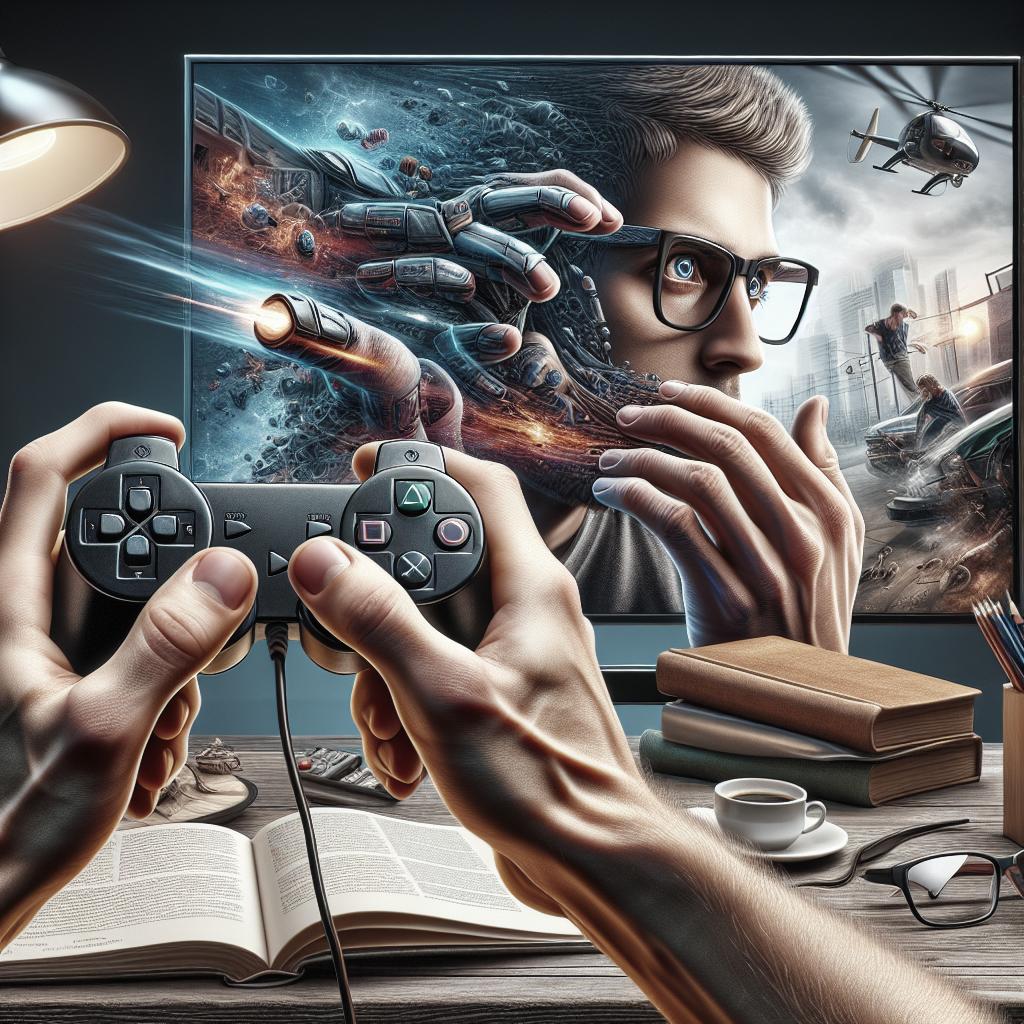
How to Improve Hand-Eye Coordination with Gaming
In today’s digital landscape, video games are not only a source of entertainment but also serve as powerful tools for enhancing hand-eye coordination. This blog post explores how gaming can sharpen visual skills, discusses the relationship between hand-eye coordination and e-sports, and addresses the role of physical exercise for professional gamers. By delving into these areas, we’ll uncover techniques and strategies that contribute to improving this essential skill through gaming. Dive in to discover how your favorite pastime can potentially boost your cognitive abilities and offer long-term benefits beyond the virtual world.
What Is Hand-Eye Coordination?
Hand-eye coordination is the synchronized control of eye movement with hand movement, enabling individuals to process visual input to guide their hands in performing a task. This skill is integral to everyday tasks and complex activities alike, from catching a ball to engaging in intricate surgical procedures. Effective coordination between the visual and motor systems allows for precise actions and responses.
In gaming, hand-eye coordination is continuously exercised as players must react quickly and accurately to visual stimuli. Gamers constantly adjust their actions based on what they see on-screen, fine-tuning the alignment between visual processing and motor skills. Thus, gaming offers a unique platform to enhance this coordination in an engaging and entertaining manner.
Visual Skills and Gaming
Video games, particularly action and fast-paced genres, require and develop a range of visual skills that contribute to better hand-eye coordination. Players must interpret complex visual environments, track moving objects, and differentiate subtle shifts in the scenery. Such tasks enhance focus, spatial awareness, and reaction times.
Research has shown that gamers tend to have superior visual search abilities and heightened peripheral vision capabilities compared to non-gamers. Regular gaming practice can significantly enhance an individual’s ability to detect and process visual information, thereby improving overall coordination and reflexes. These skills translate into real-world benefits, such as improved driving capabilities and a better proficiency in activities requiring precision.
Hand Eye Coordination and E-Sports
E-sports has revolutionized the perception of gaming by showcasing the high level of skill and coordination required among professional players. Competitions demand not only strategic thinking and team coordination but also the precise hand-eye synchronization to execute complex sequences in rapid succession. Thus, e-sports athletes demonstrate exemplary hand-eye coordination under high-pressure scenarios.
The rigorous training schedules of e-sports players often include specific drills aimed at enhancing their hand-eye coordination. Techniques involve repetitive tasks, hand-tracking exercises, and studying gameplay to identify and perfect muscle memory patterns. As e-sports continues to grow, the focus on coordination as a cornerstone skill only amplifies, highlighting its importance both for performance and competitive edge.
E-Sports and Exercise
While gaming is primarily a sedentary activity, professional e-sports players incorporate physical exercise into their routines to maintain overall health and optimize performance. Exercise is known to improve cognitive functions, reduce stress, and enhance focus—all critical elements for maintaining high levels of hand-eye coordination during competitive gaming.
In addition to physical benefits, exercise helps in maintaining flexibility and preventing injuries frequently associated with prolonged gaming sessions, such as repetitive strain injuries. Many e-sports teams now employ fitness coaches to develop tailored programs that address both the physiological and psychological needs of players, ensuring resilience and peak performance during tournaments.
Improving Hand Eye Coordination
For gamers looking to improve their hand-eye coordination, practice and variety are key. Engaging with different game genres, such as first-person shooters, puzzle games, and sports simulations, can challenge and develop various aspects of coordination. Utilizing training software designed to improve reaction times and accuracy can also substantially benefit players.
Besides in-game practice, integrating activities that promote agility and reflexes, like table tennis or juggling, can complement gaming efforts. These activities provide physical counterparts to virtual exercises, enhancing hand-eye synchronization further. Importantly, maintaining a balanced gaming routine that incorporates breaks and stretches helps prevent fatigue and supports sustained improvement in coordination.
Future Prospects
As the intersection between gaming and cognitive sciences deepens, the potential to continue leveraging video games as a means to enhance hand-eye coordination grows. Future developments may see more sophisticated training tools and immersive experiences that further refine these skills. With ongoing research and technological innovations, video games stand to offer even greater benefits for cognitive development and practical applications, influencing fields beyond gaming, such as medicine and education.
| Section | Key Insights |
|---|---|
| What Is Hand Eye Coordination? | Explains the synchronization of visual input and motor output, crucial for precise actions. |
| Visual Skills and Gaming | Highlights how video games enhance visual perception, spatial awareness, and reaction times. |
| Hand Eye Coordination and E-Sports | Discusses the role of coordination in professional gaming and training techniques used by e-sports athletes. |
| E-Sports and Exercise | Describes the incorporation of physical exercise in e-sports to support cognitive function and prevent injuries. |
| Improving Hand Eye Coordination | Suggests methods for enhancing coordination through diverse gaming and physical activities. |